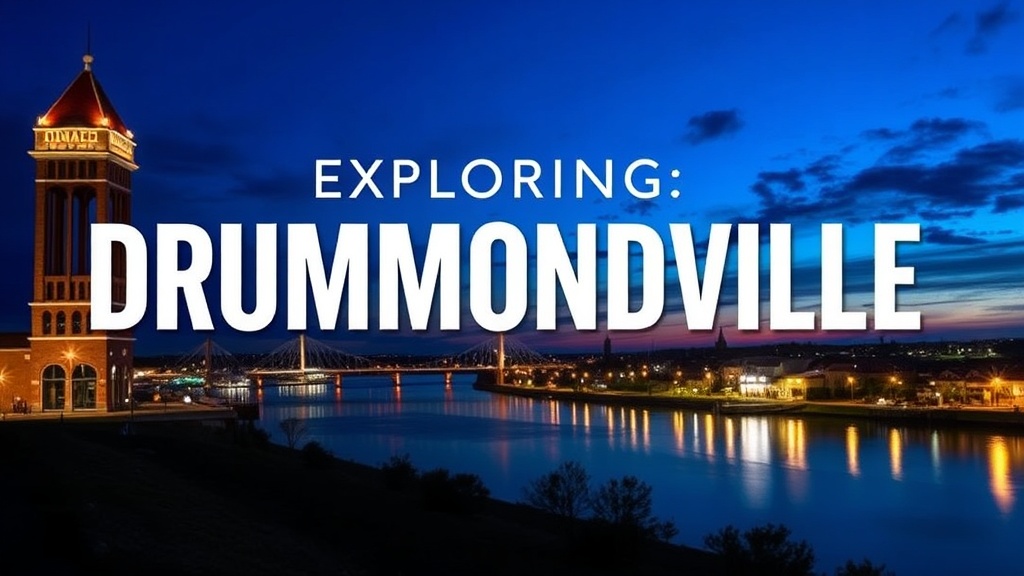
Exploring Drummondville: A Complete Local Guide to Quebec's Hidden Gem

This guide breaks down everything worth knowing about Drummondville — from the best poutine spots and hidden hiking trails to the cultural festivals that draw visitors from across Quebec. Whether you're planning a weekend trip, considering a move, or just curious about what makes this mid-sized city tick, you'll find practical recommendations grounded in local experience.
What is Drummondville known for?
Drummondville stands out as the birthplace of poutine — that iconic Quebec dish of fries, cheese curds, and gravy. But there's more here than just culinary history. The city serves as a manufacturing hub (known for its textile and transportation industries) while maintaining a surprisingly active arts scene.
Located roughly halfway between Montreal and Quebec City along Highway 20, Drummondville occupies a strategic position in the Centre-du-Québec region. The city sits at the confluence of the Saint-François and Drummond rivers, which shaped its early development as a mill town in the early 19th century.
Here's the thing: Drummondville doesn't try to compete with its bigger neighbors. Instead, it offers something increasingly rare — a city large enough to have real amenities (hospitals, universities, shopping) but small enough that you can still find parking downtown and chat with shop owners who remember your name.
The City of Drummondville officially counts about 79,000 residents, making it the 15th largest city in Quebec. That scale matters. You've got the Cégep de Drummondville bringing in young energy, established industries providing stable employment, and a growing retiree population drawn by affordable housing and healthcare access.
What are the best things to do in Drummondville?
The top attractions blend history, outdoor recreation, and food culture — often with a distinctly Quebecois character you won't find replicated elsewhere.
Le Village Québécois d'Antan
This living history museum ranks as the city's premier draw. Spread across 100 acres, the village recreates Quebec life from 1810 to 1930 through over 70 historic buildings, costumed interpreters, and working demonstrations. The blacksmith shop, general store, and one-room schoolhouse aren't props — they're authentic structures moved from surrounding communities.
Visit during December for the "Noël d'Antan" event. The entire village transforms with period-appropriate holiday decorations, horse-drawn sleigh rides, and traditional Quebecois feasting. It's crowded, sure — but the atmosphere justifies the lines.
Parc Marcel-Lépine
For outdoor enthusiasts, this riverside park delivers. The trail network runs along the Saint-François River, connecting to the broader Route Verte cycling network that spans Quebec. Rent bikes from Vélo Drummond (downtown on Lindsay Street) or bring your own.
Summer brings kayakers and paddleboarders. Winter? The same trails become cross-country ski routes maintained by the local club. The park's boat launch sees steady traffic from bass fishermen — the Saint-François holds excellent smallmouth populations.
The Poutine Trail
Yes, it's touristy. No, that doesn't make it less delicious. Several local establishments claim poutine pedigree:
- Le Roy Jucep — The original, founded in 1964 by Jean-Paul Roy. Their claim as poutine's birthplace is disputed by some food historians, but the restaurant's wall of celebrity photos and vintage decor make it worth the stop regardless.
- La Banquise — Not the Montreal location; this is a separate Drummondville institution with 30+ poutine variations. The "T-Rex" (bacon, pepperoni, ground beef, sausage) has achieved local legend status.
- Fromagerie Lemaire — For the purists. This cheese producer sells fresh curds daily — squeaky, room-temperature, made that morning. Grab a bag and eat them in the car like a true local.
Where should you eat in Drummondville?
Beyond poutine, the dining scene punches above its weight. Immigration patterns (particularly Portuguese and Haitian communities) have diversified options well beyond typical small-city Quebec fare.
| Restaurant | Cuisine | Best For | Price Range |
|---|---|---|---|
| Restaurant Le Cellier | Quebecois/French | Date nights, wine list | $$$ |
| Rotisserie St-Hubert | Quebec chain chicken | Consistent BBQ chicken, lunch specials | $$ |
| Restaurant Porto | Portuguese | Grilled fish, family-style portions | $$ |
| Saveur des Continents | International buffet | Large groups, variety | $$ |
| Boulangerie Louise | Bakery/Café | Croissants, coffee, breakfast | $ |
The catch? Dinner service ends earlier than in Montreal. Most kitchens close by 9:00 PM on weeknights, 10:00 PM weekends. Plan accordingly — or embrace the Quebec tradition of "souper" (the evening meal) around 5:30 PM.
Worth noting: Drummondville has developed a modest craft beer scene. Microbrasserie Le Grimoire (downtown on Lindsay) rotates taps seasonally, with their "Sirène" IPA winning provincial awards. The taproom stays open later than most restaurants, making it a reliable post-dinner option.
How much does it cost to live in Drummondville?
Significantly less than Montreal or Quebec City — that's the straightforward answer. Housing costs run roughly 40% below Montreal averages, with detached homes in established neighborhoods often listed between $350,000 and $500,000 (as of 2024 market conditions).
Rentals follow the same pattern. A two-bedroom apartment in central Drummondville typically rents for $900-$1,200 monthly — compared to $1,600+ in Montreal's outer boroughs. Utilities run lower too; Hydro-Québec rates are province-standard, but smaller spaces mean smaller bills.
Other cost advantages:
- Car insurance drops substantially — the SAAQ (Quebec's public auto insurer) charges based on territory, and Drummondville's lower accident rates reduce premiums
- No toll roads within city limits (unlike Montreal's bridges)
- Property taxes run lower than major centers, though rates vary by municipality
That said, salaries often reflect the lower cost of living. Manufacturing and healthcare positions pay reasonably well, but professional services (law, accounting, tech) may offer 15-20% less than Montreal equivalents. Remote workers earning big-city salaries while living here — that's the sweet spot.
Neighborhood breakdown
Centre-Ville — The historic core, walkable, older housing stock. Some gentrification happening. Good for renters and young professionals.
Drummondville-Sud — Suburban, family-oriented, newer construction. Big-box retail along Boulevard Saint-Joseph. Car-dependent.
Saint-Charles-de-Drummond — Merged into the city in 2004, this area retains small-town feel. More affordable, more space, farther from services.
Domaine du Parc — Upscale development near golf courses. Larger lots, higher prices, newer builds. Popular with professionals and retirees.
What about getting around?
You'll want a car. Full stop.
Drummondville has public transit — the CJAD bus system covers major routes — but service frequencies run every 30-60 minutes, with limited evening and weekend coverage. The downtown core is walkable, and the cycling infrastructure improves yearly (those Route Verte connections), but most residents rely on personal vehicles.
Driving is straightforward. Highway 20 bisects the city, providing easy east-west access. The 55 (north-south) intersects nearby. Traffic congestion exists during rush hour — especially around the Saint-Joseph Boulevard commercial strip — but it's manageable compared to major centers. A 15-minute delay counts as "heavy traffic" here.
Parking is abundant and mostly free. Downtown meters run $1-2/hour during business hours; evenings and weekends are typically free. Mall parking is unlimited. Street parking in residential areas faces no restrictions.
When should you visit?
Summer and fall offer the best combination of weather and events. The Festival de la Poutine (late August/early September) draws 50,000+ visitors for live music, carnival rides, and competitive poutine eating. Book accommodations early — the limited hotel stock sells out.
Winter has its charms if you embrace cold-weather activities. The Village Québécois d'Antan runs winter programming. Nearby ski hills (Mont Ham, about 45 minutes east) offer affordable downhill skiing without the Tremblant crowds.
Spring — mud season — is the least appealing. Melting snow reveals litter, trails become impassable, and the weather swings between freezing and 15°C weekly. Locals call it "breakup season" for good reason.
"Drummondville isn't trying to be Montreal-lite. It's comfortable in its own skin — industrial heritage, agricultural surroundings, and all." — Jade Dubois
The city rewards visitors who adjust expectations. Don't come expecting European charm or mountain vistas. Instead, find excellent food made without pretension, genuinely friendly service, and prices that don't require a finance degree to afford. That combination — increasingly rare in tourist-heavy destinations — makes Drummondville worth the detour off Highway 20.